
What Causes Rear-End Collisions in Alberta
Rear-end collisions in Alberta happen across a wide range of conditions - from clear-weather city traffic to icy rural highways. A rear end accident lawyer alberta sees the same contributing factors appear repeatedly across cases:
- Driver distraction - phone use, GPS interaction, eating, or anything else that pulls attention away from traffic ahead
- Tailgating or following too closely, which eliminates the stopping distance needed to avoid a collision when traffic slows unexpectedly
- Poor road conditions - snow, ice, freezing rain, or fog that reduce both visibility and the stopping distance that drivers have been taught to expect
- Reversing in parking lots or narrow streets, where the reversing driver may not see a vehicle behind them or may misjudge the distance
- Vehicle defects or mechanical issues - brake failures, tire problems, or other mechanical factors that prevented the driver from stopping in time
Who Is at Fault in a Rear-End Collision?
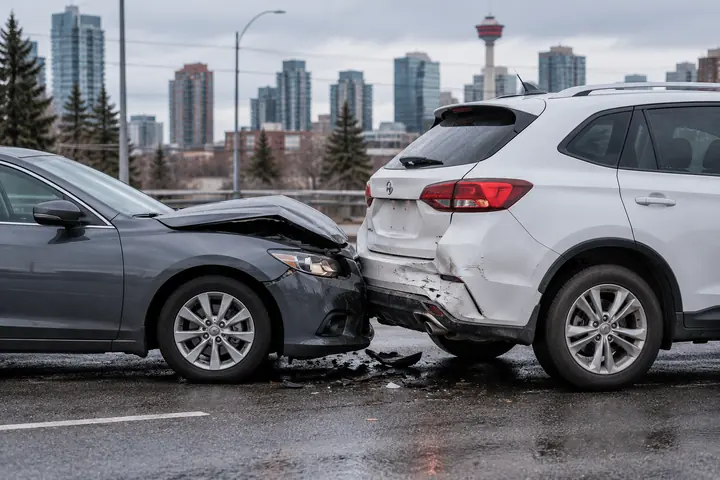
Fault in a rear-end collision in Alberta is not as automatic as many people assume. While there’s a general presumption that the rear driver was following too closely or not paying attention, that presumption can be challenged based on the specific facts. A rear end accident lawyer calgary reviews those facts before reaching any conclusion about fault allocation.
When the Rear Driver Is Presumed at Fault
Alberta’s Traffic Safety Act requires drivers to maintain a safe following distance - enough space and reaction time to stop safely if the vehicle ahead slows or stops suddenly.
When a rear-end collision occurs in normal traffic conditions, the default assumption is that the rear driver failed to maintain that distance.
This presumption isn’t absolute, but it’s where the analysis typically starts under Alberta’s Contributory Negligence Act.
When Fault Can Shift to the Lead Driver
Several circumstances can shift fault partially or fully to the lead driver. Sudden or random braking without a valid reason - not responding to traffic or a hazard ahead - can reduce the rear driver’s liability.
A lead driver whose brake lights or turn signals were malfunctioning at the time of the collision may bear responsibility for the resulting crash.
Impaired driving by the lead driver that contributed to erratic behaviour is another factor.
Chain-reaction collisions present a different analysis. Where a rear driver was pushed forward by a third vehicle, fault may rest with the driver of that third vehicle rather than the one in the middle. A rear end accident lawyer Calgary drivers turn to can review police reports, witness statements and vehicle damage to determine who was actually responsible.
How rear end collision fault alberta is determined under provincial rules always depends on the specific circumstances of the crash. What matters here is that the facts of your collision are worth having reviewed by a rear-end car accident lawyer in calgary before accepting any initial insurer determination.
What to Do After a Rear-End Collision in Calgary
The steps taken in the first hours after a rear-end collision in Calgary affect everything that comes later in the claims process:
- Make sure everyone is safe and call 911 if anyone is injured - police attendance is particularly important when injuries are involved
- Report the accident to police when required under Alberta law - the exact reporting threshold should be confirmed with the lawyer you’re matched with, as sources differ and the figure has changed over time
- Exchange insurance and contact information with all other drivers involved - avoid admitting fault or minimizing your injuries in conversation at the scene, even if the accident seems minor
- Document the scene thoroughly - photographs of vehicle positions, damage to all vehicles, road conditions, skid marks, and any visible injuries while everything is still in place
- Seek medical attention even if you feel fine - whiplash and concussion symptoms frequently don’t appear clearly for 24 to 72 hours after the collision; a same-day or next-day medical record establishes the connection between the accident and your symptoms
- Notify your own insurer - be honest and accurate about your symptoms; avoid giving a recorded statement or signing any documents before speaking with a rear end accident lawyer alberta about what those steps might mean for your claim
- Keep a record of ongoing symptoms and treatment over time - a diary noting daily pain levels, limitations, and treatment appointments is practical documentation that matters if the claim becomes disputed
Your Options After a Rear-End Collision in Calgary
Rear-end collision victims in Calgary have several potential compensation routes under Alberta’s auto insurance system:
- Section B No-Fault Benefits - available through your own auto insurer regardless of who caused the rear-end collision; covers medical and rehabilitation costs, income replacement if you can’t work, and other losses up to the policy limits; available even if you were the rear driver and bore some fault for the crash
- DCPD (Direct Compensation for Property Damage) - since 2022, an insured driver’s own insurer generally covers vehicle damage regardless of fault under Alberta’s DCPD framework; this applies to property damage only and does not affect injury claims or accident benefit entitlements
- Tort / Personal Injury Claim - against the at-fault driver for damages that Section B doesn’t cover, including pain and suffering, future care costs, and income loss beyond the no-fault limits; for soft-tissue or minor injuries, Alberta’s Minor Injury Regulation sets an annually adjusted cap on non-pecuniary damages - a rear-end car accident lawyer in calgary can confirm whether your specific injuries fall within or outside the MIR definition
- MVAC Claim - if the other driver was uninsured or left the scene without being identified, Alberta’s Motor Vehicle Accident Claims Act may provide a route to personal injury compensation
What If You Had a Pre-Existing Condition?
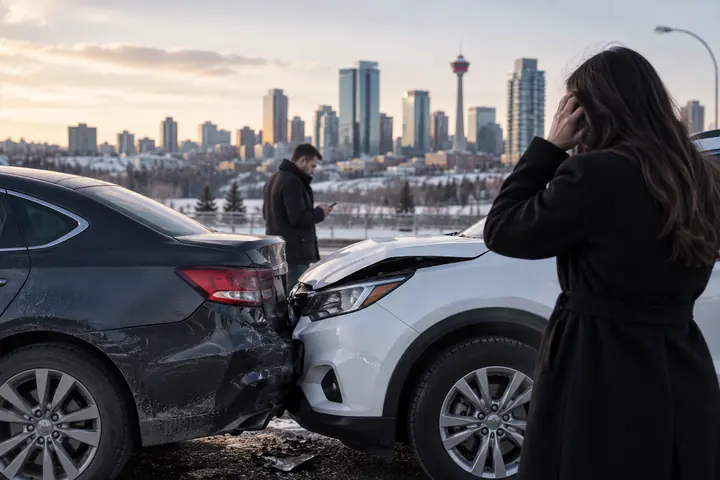
A pre-existing back or neck condition doesn’t automatically prevent a rear-end collision claim in Alberta. What matters legally is whether the accident aggravated a condition that was previously stable or manageable - and that aggravation may be compensable even if the underlying condition existed before the crash. Proper medical documentation is the key variable here.
A treatment record that clearly establishes the baseline condition before the accident and documents the change in symptoms after it provides the foundation for that argument. A rear end accident lawyer alberta can advise on how pre-existing condition issues apply to your specific claim and what documentation will be most useful.
How Our Matching Service Works
car-accident-lawyer-calgary.ca connects people hurt in rear-end collisions in Calgary and across Alberta with independent, LSA-licensed lawyers. It’s free to use, with no obligation and nothing to sign before the first conversation. If you’ve been hit from behind, a rear end accident lawyer Calgary drivers rely on can explain what your claim may involve.
Tell Us What Happened
Share a description of the collision - when and where it happened, who was involved, what injuries you sustained, and what questions you have about your options.
Whether you’re dealing with a Section B dispute, a pre-existing condition complication, a disputed fault determination, or an uninsured driver, the details help match you with a rear end accident lawyer alberta whose practice fits your situation.
We Match You With a Lawyer From Our Calgary/Alberta Network
We connect you with an independent lawyer licensed by the Law Society of Alberta who focuses on motor vehicle and personal injury claims in Calgary and across the province. Every lawyer in the network is vetted for LSA licensing status and practice area focus.
A rear-end car accident lawyer in calgary familiar with Alberta’s Minor Injury Regulation, Contributory Negligence Act, and DCPD framework is positioned to assess both compensation tracks and advise on the steps that matter most for your specific situation.
Speak Directly With the Lawyer: Free, No Obligation
The initial consultation is free. You speak directly with the lawyer - not a screener - and get specific answers about your rear-end collision claim: how fault applies, whether the MIR cap affects your injury, what Section B covers, and what steps make sense given where things stand. There’s no cost and no commitment to that first conversation.
Decide How to Move Forward
There’s no pressure and no cost to get informed. After a rear end collision Alberta drivers often have questions about fault and compensation, and you decide whether to retain the lawyer, seek a second opinion, or handle things yourself. car-accident-lawyer-calgary.ca costs nothing to use either way.
What Can Affect the Time and Value of a Claim
Rear-end collision claims in Calgary and across Alberta vary significantly in how long they take to resolve and what they ultimately recover. No accurate figure can be given without reviewing the specific facts of the collision - outcomes vary by case and no settlement range applies universally:
| Factor | Why It Matters |
|---|---|
| Whether fault is disputed | Exceptions to the presumption of rear-driver fault take time and evidence to establish |
| Severity and documentation of injury | Stronger documentation supports a stronger claim; soft-tissue injuries are harder to establish objectively |
| Whether the MIR cap applies | Whether your injury falls inside or outside the Minor Injury Regulation definition affects the available non-pecuniary damages |
| Pre-existing condition | Requires clear medical documentation of the baseline condition and the change caused by the accident |
| Whether the other driver was insured | Determines whether a standard tort claim or an MVAC route applies |
| Insurer response | Disputed treatment coverage or delayed benefit payments can extend the timeline |
Ask the lawyer you’re matched with for an assessment of your specific situation. Every rear end collision Alberta case turns on its own facts, and no general estimate replaces a review of what actually happened.
Why Use car-accident-lawyer-calgary.ca to Find a Rear-End Collision Lawyer in Calgary
Vetted, Independent Network
Every lawyer in the car-accident-lawyer-calgary.ca network is independently licensed by the Law Society of Alberta and focuses on personal injury and motor vehicle claims. car-accident-lawyer-calgary.ca is not a law firm and does not represent clients - it connects people with lawyers who handle rear-end collision claims as a primary practice area.
A rear end accident lawyer calgary in the network understands Alberta’s specific insurance framework and the practical challenges these claims involve.
Free to Use, No Obligation
There is no cost to use the matching service, and consultations with lawyers in the network are typically free. If you retain a lawyer through car-accident-lawyer-calgary.ca, many work on a contingency-fee basis - a percentage of the settlement, with specific terms confirmed directly with the lawyer you choose. Nothing is owed to car-accident-lawyer-calgary.ca regardless of outcome.
Fast Matching
Most users are matched with a rear-end car accident lawyer in calgary within one business day. If the 2-year Limitations Act deadline is approaching, flag it in your intake form and car-accident-lawyer-calgary.ca prioritizes the match accordingly.
About This Page
Reviewed for Accuracy
Content is checked against current Alberta insurance legislation, including the Traffic Safety Act, Contributory Negligence Act, and DCPD framework, and updated when regulatory limits or procedural requirements change.
We Are Not a Law Firm
car-accident-lawyer-calgary.ca is a lawyer matching portal, not a law firm. It does not provide legal advice, legal opinions, or legal representation. Nothing on this page constitutes legal advice for any specific situation.
How We’re Compensated
car-accident-lawyer-calgary.ca is free for injured people to use. The portal may receive a referral fee from lawyers or law firms in the network when a match results in a client relationship. This fee is paid by the lawyer, not by you, and does not affect the amount of any settlement or award, the fees the lawyer charges you, or which lawyer you’re matched with.