
What Is a Collision Reporting Centre?
A collision reporting centre - or collision reporting center, as it’s sometimes spelled - is a facility or service where drivers file reports for collisions that don’t require police to attend the scene.
Some people search for this as an accident reporting centre; the terms refer to the same thing.
The purpose is administrative: the report creates an official record that insurers use to process claims, and it fulfils the reporting obligation under Alberta’s Traffic Safety Act for collisions that meet the threshold.
A collision reporting centre does not determine who was at fault. Fault is a separate determination made by insurers through their own process, and it can be disputed through that process or through legal action if there’s a disagreement. Many drivers arrive at a collision reporting centre expecting a judgment about the accident - they’re filing a record, not receiving a verdict.
In Alberta, collision reporting currently operates through two channels depending on where you are and what type of collision occurred: physical locations in Edmonton (confirmed by Edmonton Police Service), and an online tool called Report My Collision available through alberta.ca for eligible collision types across the province.
The two systems serve the same legal function. They just use different methods depending on location and collision type.
In Edmonton, for example, minor collisions are often reported at the collision reporting center Edmonton police operate, while other situations require a different process.
Knowing which applies to your situation before the accident happens saves time and reduces stress when you actually need to act quickly.
When Do You Need to Report a Collision in Alberta?
The $5,000 Threshold
The $5,000 combined-damage threshold is confirmed by three independent sources for this project: alberta.ca, the AMA, and the Edmonton Police Service. If the total estimated damage to all vehicles and property involved in the collision appears to reach or exceed $5,000, reporting is required under Alberta’s Traffic Safety Act.
A collision that looks minor on both vehicles can still cross the threshold once structural damage, frame alignment costs, and airbag deployment are factored in.
In Edmonton specifically, the Edmonton Police Service notes that failing to report a reportable collision can result in a $405 fine.
If you’re unsure whether your collision qualifies, visiting an accident reporting centre is the safest way to make sure it’s properly on record.
The $5,000 threshold is an estimate made at the scene, not a formal assessment. If you’re unsure whether the damage crosses the line, reporting is the more protective choice - it’s significantly easier to have filed a report you didn’t need than to face questions later about why you didn’t file one when one was required.
Other Situations That Require Reporting
The $5,000 threshold isn’t the only trigger. Whether you file online or visit an Alberta collision reporting center, reporting is required in several other situations regardless of the damage amount:
- Anyone involved in the collision is injured - including pedestrians, cyclists, and passengers, not just vehicle occupants
- Criminal activity is involved - impaired driving, a stolen vehicle, or other offences that require police investigation rather than administrative reporting
- A driver involved does not have a valid licence, cannot produce insurance documents, or the vehicle appears to be unregistered
- Public infrastructure is damaged - traffic signals, street signs, guardrails, or other government property, regardless of the total damage amount
- A pedestrian or cyclist was struck, regardless of whether they appear injured at the scene
If any of these apply, contact police directly rather than proceeding to a collision reporting centre. An administrative centre, such as the collision reporting center Edmonton drivers use for minor crashes, is not the appropriate channel when emergency response or criminal investigation is involved.
Reporting a Collision in Edmonton
Edmonton Collision Reporting Centre Locations
Edmonton has two confirmed physical Collision Reporting Centre locations operated through the Edmonton Police Service, sometimes searched as the edmonton collision reporting center.
| Location | Address | Phone | Hours |
|---|---|---|---|
| Edmonton North CRC | 15750 116 Ave NW, Edmonton, AB T5M 3S5 | 780-452-1531 | Mon-Sat 8am-8pm, Sun 10am-6pm, closed statutory holidays |
| Edmonton South CRC | 5805 87A St NW, Edmonton, AB T6E 5Z1 | 587-758-9427 | Mon-Sat 8am-8pm, Sun 10am-6pm, closed statutory holidays |
The Edmonton collision reporting centre - north location and the Edmonton collision reporting centre - south location both fall under the Edmonton Police Service. If you’re not sure which Edmonton collision reporting center is closer to you, the EPS non-emergency line for general collision inquiries is 780-423-4567.
Before You Go
Checking edmonton collision reporting centre wait times online before heading to either location can save a meaningful amount of time if one centre is busier than the other on a given day - particularly during winter months when collision volume is higher across the city.
Both centres operate during similar hours, so checking which is shorter before you leave makes a practical difference, especially in January or February when Edmonton’s collision volume tends to peak.
A tow truck can take a vehicle that isn’t drivable directly to a Collision Reporting Centre - you don’t need to arrange a separate trip after the tow. If weather conditions are unsafe and your vehicle doesn’t require immediate towing, waiting until conditions improve before travelling to report is generally reasonable.
Drivers have the right to choose their own tow provider unless police have directed otherwise. You’re not obligated to accept the first truck that shows up, and you should not sign any authorization documents at the scene under pressure before you’ve had a chance to read them.
Reporting a Collision in Calgary and Other Alberta Communities
Report My Collision: Alberta’s Online Reporting Tool
Calgary does not have a confirmed physical collision reporting centre calgary location at the time this page was prepared.
What Calgary does have is a more significant role in Alberta’s online reporting system.
It’s the pilot city for two-vehicle online reporting through the province’s Report My Collision tool, making it the collision reporting center Calgary option for many drivers.
So if you’re searching for a physical collision reporting centre Calgary drivers can visit, the online tool is usually where you’ll be directed instead.
Alberta’s Report My Collision (RMC) tool is accessible through alberta.ca. It currently covers the following collision types:
- Single-vehicle collisions - hitting an animal or object, or running off the road with no other vehicle involved
- Parked vehicle hit-and-run with no witnesses and no other evidence available at the scene
- Two-vehicle collisions - currently available for online submission as part of the calgary collision reporting centre pilot program only; outside Calgary, two-vehicle collisions still require in-person reporting at local law enforcement
To use the Report My Collision tool, an Alberta.ca account is required. A verified account is needed to submit a report - basic registration is not sufficient. For collision types not covered by the tool, or outside the areas where online submission is currently available, contact your local police service directly for guidance on how to report in your community.
What You’ll Need
For any report submitted through the Report My Collision tool, photographs of vehicle damage are a required part of the submission - have these ready before starting the process.
Poor-quality or incomplete photos can slow the process or require a follow-up.
For two-vehicle collisions, you’ll need the other driver’s driver’s licence number and licence plate number, consistent with Alberta’s Traffic Safety Act requirements for exchanging information after a collision.
What to Do Before You Report
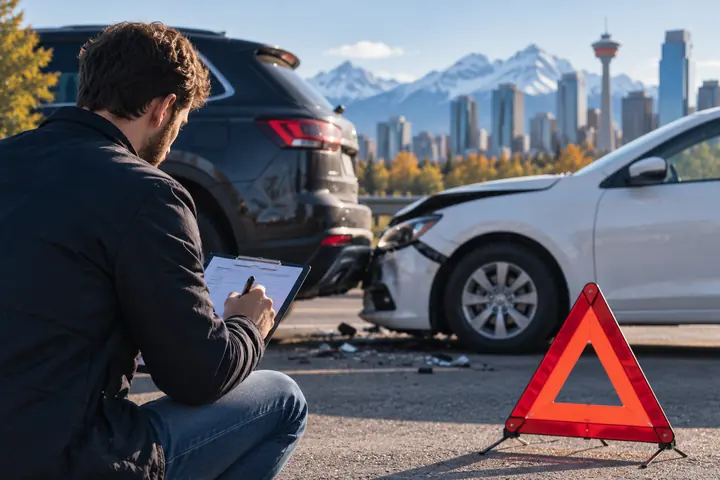
Whether you’re heading to an Edmonton collision reporting centre or using Alberta’s online tool, the information you gather at the scene determines how well the report can be completed. Taking a few extra minutes at the scene prevents significant problems when you sit down to file the report. Do this before leaving the scene or letting the other driver leave:
- Make sure everyone involved is safe - if anyone appears injured, call 911 first; this step comes before anything administrative and takes priority over every other item on this list
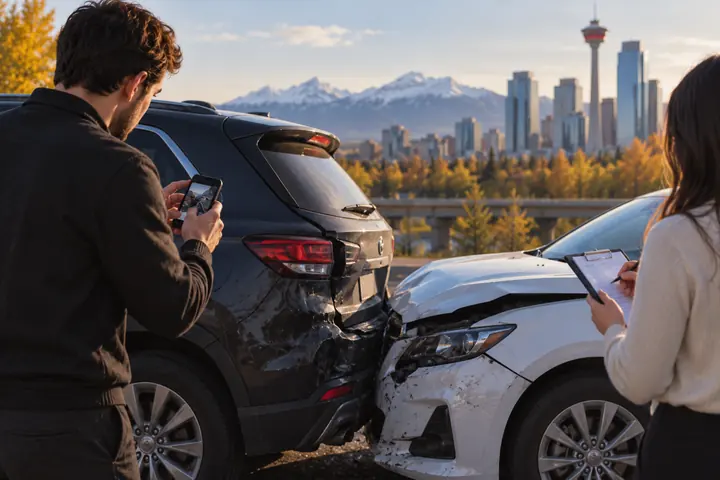
- Take photos of the damage to all vehicles, the positions of the vehicles before they’re moved, road conditions, any skid marks or debris, and any visible injuries while everything is still in place
- Exchange contact information, driver’s licence details, insurance information, and licence plate numbers with all other drivers - this is a legal requirement under the Traffic Safety Act for reportable collisions and is necessary to complete an online Report My Collision submission
- Speak with any witnesses who are still at the scene and collect their names and contact information before they leave - witness accounts become harder to obtain once people have driven away
- If your vehicle is drivable and it’s safe to do so, move it out of the active lane of traffic - leaving a drivable vehicle blocking a lane creates an additional hazard and can complicate liability questions
- Be cautious of tow trucks that arrive at the scene without being called - per AMA guidance on predatory towing, you have the right to choose your own tow provider; don’t sign any authorization documents under pressure before you’ve had a chance to read them carefully
Does Reporting Determine Who Was at Fault?
No - and this is one of the most common misunderstandings about a collision reporting center. A report filed in person in Edmonton or online through Report My Collision is an administrative record.
It documents what happened, creates a report number for insurance purposes, and fulfils the legal reporting obligation under Alberta’s Traffic Safety Act. Officers present at a reporting centre do not make fault determinations as part of the reporting process, and nothing in the report constitutes a finding of fault.
Fault is assessed separately by each insurer under Alberta’s Fault Determination Rules, based on each insurer’s own investigation. That assessment can be challenged if there’s a dispute - either through the insurer’s internal review process or, in some cases, through legal action. The collision report is a starting point for that process, not a conclusion.
If You Were Injured, What Happens Next
Completing a collision report is one step in a larger process when an injury is involved - and it’s worth understanding how the reporting step connects to the compensation process. Under Alberta’s auto insurance system, Section B no-fault benefits are available through your own insurer regardless of who caused the accident.
These benefits cover medical and rehabilitation costs, income replacement if you can’t work, attendant care if needed, and related expenses. They apply whether you were the driver, a passenger, a pedestrian, or a cyclist involved in the collision.
If the injury is significant, a tort claim against the at-fault driver may also be available, subject to Alberta’s Limitations Act and, for minor or soft-tissue injuries, the Minor Injury Regulation cap on non-pecuniary damages.
Filing a report at the collision reporting centre Edmonton police run doesn’t affect your right to bring that claim, but the report itself can become useful evidence later.
FAQ
What is a collision reporting centre?
A collision reporting centre - or collision reporting center - is a location or service where drivers report certain collisions that don’t require police to attend the scene.
In Alberta, physical centres are confirmed in Edmonton.
In Calgary and other communities, Alberta’s online Report My Collision tool handles some collision types - check eligibility before assuming the tool applies to your specific situation.
Do I have to go to a collision reporting centre?
If your collision meets Alberta’s reporting requirements - generally $5,000 or more in combined damage, an injury, or certain other situations such as damage to public property or an unlicensed driver - yes, reporting is required.
Collisions with no injuries and damage well below the threshold generally don’t need to be reported, though you can choose to report them for insurance documentation purposes.
Is there a collision reporting centre near me?
Physical locations are confirmed in Edmonton - North and South.
In Calgary and many other Alberta communities, online reporting through Alberta’s Report My Collision tool may be an option for eligible collision types.
For a collision reporting centre near me search in areas outside Edmonton and Calgary, contact your local police service for guidance on where and how to report in your specific community.
How long is the wait at a collision reporting centre?
Wait times at Edmonton’s collision reporting centres vary and can be checked online before you go. If your vehicle isn’t drivable, a tow truck can bring you and your vehicle directly to the centre. If road conditions are unsafe, waiting until it’s safe to travel is generally reasonable before attending in person.
Are you a law firm?
No. car-accident-lawyer-calgary.ca is not a law firm and does not provide legal advice. This guide is for general information only, including the details about the collision reporting centre Edmonton drivers use. If you were injured in a collision, car-accident-lawyer-calgary.ca can connect you with an independent lawyer licensed by the Law Society of Alberta, free of charge.